Prayer Letter for Germany July / August 2026
Dear intercessors,
This prayer letter for July / August has been distributed in Germany under the following introductory text :
"This is a prayer letter intended to awaken new hope for our country of Germany. For we carry hope for Germany in our hearts—why else would we pray?
Over the coming two months - as is always the case with this combined July/August issue - we want to plant this hope more deeply into the soil and atmosphere of our land. This involves far more than analyzing developments or assessing external circumstances. It is about being filled with a spirit of hope that shapes our vision, our thinking, and our prayers.
We have every reason to look beyond what the news and headlines convey. We do not want to let our gaze remain fixed on the crises of our time; instead, we want to lift our eyes until we see God’s heart. For only from that vantage point can we perceive reality in all its depth. Only from there do we gain the perspective that imparts hope. And only from there can we pray and act without being driven by fear."
We are praying very much during this summer for Germany to be set free from fear and anxiety ("Angst") for the future, and to receive and implement a new calling ("Berufung") to serve God in Europe (especially for Ukraine/Russia), in the Middle East (especially for Israel), and in the world.
Thank you once again for praying with us intercessors in Germany. You may also be called to pray for your country to be set free of fear and to receive a new calling !
Your Call of the Watchmen Team - Germany and International.
PS: Please consider using the "Sway" version (the large print, colour graphic version) of the prayer letter in your prayer groups, projected onto a wide-screen, if possible, as this can really help you to follow the prayer topics as you pray together.

Germany between fear and its calling
Germany is afraid. Afraid of economic decline, war, social division, migration, the loss of prosperity, and an uncertain future. Many of these concerns are really present in all areas of Germany. Yet the crucial question is not whether these are grounds for us to have fear and concern, but rather: how do we as citizens and intercessors actually live with and react to such fear and concern?
Fear is more than just a feeling; it is a perspective. It narrows our view, makes risks appear greater than opportunities, and binds our energy to preserving what once was. A society shaped by fear eventually does nothing but simply react instead of shaping the future. It manages conservatively, protects, and secures - but it no longer dares to venture forth with confidence.
Germany was once a land of poets, thinkers, inventors, and pioneers. People forged new paths, not because they lacked fear, but because hope was greater than their apprehension, even dread. Today, narratives of crisis often dominate. Many feel that our best days are behind us. Yet those who only look backward will fail to recognise the future. The world is changing rapidly. The true danger may lie not in change itself, but in the risk that, out of fear of it, we lose sight of our calling.
The Bible reveals a God who creates the future, brings order to chaos, and - above all - actively and responsibly involves us humans in God’s mandate for creation.
The Bible reveals a God who creates the future, brings order to chaos, and - above all - actively and responsibly involves us humans in God’s mandate for creation. We are not merely stewards of the past but co-creators of the future. Courage, in the biblical sense, does not mean the absence of fear. Courage arises when people place more trust in God than in their own concerns and fears. Abraham, Moses, and Joshua ventured into the unknown—not with absolute certainty, but with a promise. Perhaps we have confused security with hope. We desire certainty before we act. Yet God rarely grants complete certainty. But He does provide direction, presence, and a promise - and invites us to take the next steps.
Many fears go deeper than the facing of political or economic developments. They stem from an uncertainty about who we are. Germany bears the weight of a difficult historical legacy. We often speak of our mistakes, yet ever more rarely of our calling. We analyse problems but scarcely dare to envision great things. A nation without hope loses its imagination and becomes ruled by its fears. Today, Germany does not need more people capable of identifying every danger - we have enough of those. It needs people who see new possibilities through God’s eyes and help shape the times we live in. People defined not by panic, but by promise. People who take responsibility, develop ideas, build community, and courageously forge new paths. Fear says, "Hold on to what you have." God says, "Behold, I make all things new." We have every reason to look beyond the scope of news reports and headlines. We do not want to fix our gaze on the crises of our time, but rather lift our eyes until we see God’s heart. For only from that vantage point do we perceive reality in its full depth. Only from there do we gain the perspective that inspires hope. And only from there can we pray and act without being governed by fear.
Alexander Schlüter
How can we pray for Germany?
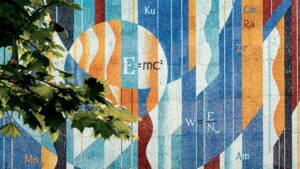
When praying for Germany, we should not let ourselves be guided solely by problems or news headlines. Instead of praying against crises and fears, let us focus on what God wants to bring forth: hope, wisdom, and new perspectives.
- Praying against resignation: Ask the Holy Spirit where you have lost hope for Germany, and bring these thoughts before God. Pray for new hope and confidence instead of fear of the future. (Jeremiah 29:11; Job 11:18)
- Praying for courageous leaders: Pray for politicians, mayors, teachers, judges, business leaders, and others in positions of responsibility, that they may be guided by wisdom, integrity, and conscience - not by fear or public pressure.
- Praying for creative entrepreneurs and innovators: Pray for entrepreneurs, researchers, skilled tradespeople, founders, artists, and developers. Pray for ideas, innovation, and the courage to shape the future and take responsibility. (Proverbs 8:1ff)
Alexander Schlüter
Germany and Europe
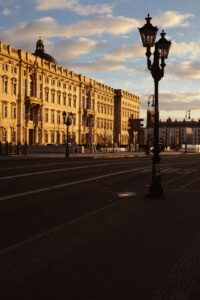
Together with France, Germany serves as a driving force in Europe and the European Union (EU) across many areas. As the largest economy and most populous nation, the European united market relies heavily on German industry. Germany now acts as the continent's hub, facing the legacy of Europe’s former divisions, and acting as a bridge between East and West. As a geopolitical actor, the EU depends on Germany taking a clear stance and providing direction. Europe’s strength vis-à-vis Russia and in the Middle East hinges significantly on the actions of German policy makers.
While our European neighbours look to Germany with this expectation of leadership, they also view with concern the faltering German economy, the erratic course taken by successive governments, and the paralysis which is stalling necessary reforms. Many, particularly in Eastern Europe, are grateful for German generosity. At the International Berlin Gathering in June, former Slovak Prime Minister Eduard Heger expressed his deep appreciation and love for Germany. He also called upon the German politicians there to once again place the Word of God and the Christian faith at the heart of politics and society as a guiding principle. In doing so, he echoed a prophetic message often spoken over Germany, that the country is indeed a driving force for Europe, not only economically and politically, but also for the spiritual renewal which our continent needs. Christians across Europe are praying that Germany will turn toward God in this way. Let us join with them in prayer for our country.
Prayer:
- We give thanks for the trust Europeans have placed in Germany since the Second World War. (Colossians 1:9–14)
- Lord, forgive us when, without You Lord, we squander our economic and political strength and drag Europe down with us into decline. (Psalm 25:11–13)
- We pray, not out of worry and fear, but out of love for Germany and in trust in God’s grace and renewal. (Psalm 85)
Karin Heepen

Peace for Israel
The statement of intent (Memorandum of Understanding – MoU) between the US and Iran is not a peace agreement. It only outlines terms for opening the Strait of Hormuz and addressing Iran’s nuclear program. In exchange, sanctions are to be eased, and Iran granted an investment framework worth $300 billion. US President Trump can no longer sustain the conflict politically or justify a war to the American public. The Strait of Hormuz has become a lever of pressure - exploiting oil prices and supply constraints - thereby exposing the West's vulnerability.
Israel’s security becomes a bargaining chip, and the country is learning the painful lesson that America is not its saviour.
Iran’s nuclear program has been set back, but not broken. The real winner is the economic empire of the Islamic Revolutionary Guard Corps (IRGC); they control the oil industry, construction, shipping, logistics and telecommunications, and stand to profit once again from the easing of sanctions. Iran uses Lebanon as a strategic wild card (Joker card): if Israel responds to Hezbollah’s attacks, it risks being cast as the spoiler of the agreement - (by effectively rejecting it). Israel’s security becomes a bargaining chip, and the country is learning the painful lesson that America is not its saviour.
This statement of intent (MoU) cannot bring lasting peace because it fails to address the core of the conflict: a regime whose identity is rooted in Islamist ideology, hostility toward Israel, proxy wars, and a drive to dominate the Middle East.
Let us pray during the scheduled 60 days of negotiations.
Prayer:
- That God intervenes, that the potential for opposition to their oppressors grows amongst the suffering populations of Iran and Lebanon, and that this leads to the oppressors being totally stripped of power. (Jeremiah 49:38f)
- That Israel learns to rely on its God rather than on the USA and military might. (Psalm 121)
- That Germany stands by Israel amidst its growing isolation, prioritizing this over economic interests in Iran and the Middle East. (John 14:27)
Karin Heepen
New approaches to education (Homeschooling)
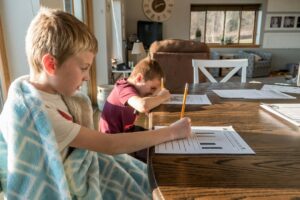
Germany has a system of compulsory schooling that requires children and young people to attend school. Nevertheless, there is an ongoing debate about whether a compulsory education requirement - rather than compulsory school attendance - would make more sense. Under an education requirement, children would still be obliged to learn and meet specific educational goals, but they could do so outside the traditional school setting.
Proponents of relaxing compulsory schooling laws argue that this would give families greater freedom in how they structure learning. Every child learns at a different pace and possesses unique strengths. Alternative forms of education - such as homeschooling, online instruction, or independent learning projects - could better cater to the needs of individual children. And such models could offer particular benefits for students dealing with issues like bullying, health problems, or with special educational needs.
Another positive advantage would be the fostering of personal responsibility. Children could engage in more self-directed learning and pursue their own interests more purposefully. At the same time, new educational opportunities and innovative learning methods could emerge.
Any potential reform could be implemented gradually. Initial steps might include pilot projects for homeschooling alongside regular assessments to ensure that educational standards are met. In the long term, compulsory school attendance could be replaced by a requirement for education that focuses on learning outcomes rather than the physical location of learning.
Prayer:
- For children and young people: That they may find more joy in learning and develop their talents.
- For parents and teachers: That they may guide children with wisdom, patience, and love. (Matthew 19:14)
- For policymakers and the education sector: Praying that forward-looking decisions be made for the well-being of children.
Alexander Schlüter

Dwelling in places of hope and promise
It is time for change. Not primarily in the external world. Not first in politics, in the headlines, or in the visible developments of our times. Rather, within ourselves and in our perception. In the way we see. In the way we encounter God and view the world. Perhaps the greatest challenge of our time is not a lack of answers. Perhaps it is a lack of a place available for God and for the new - a place for what has not yet been conceived, named, or understood. For we often enter into prayer already holding fixed ideas. We arrive with our opinions, our analyses, with our experiences and the familiar patterns of the past. Even before God can speak, we have already categorised the situation and identified a solution. We know what the problem is, who is responsible, and what ought to happen. And so, we often pray from the place of the known. Yet God frequently meets us in the place of the not-yet-known - where we do not immediately have an understanding, where we cannot control everything, and where our old categories and solutions no longer suffice.
Perhaps God is calling us in this season to create a new place. Not a place we immediately fill again with our own thoughts. Not a place defined by our fears, expectations, or familiar patterns. But a new open place.
A place where we listen. A place where something new can be born. For new things rarely emerge in overcrowded places. They arise where there is room for emptiness - where we are willing to let go of our certainties for a moment, and where we have the courage not to find immediate answers.
Perhaps the summer is an invitation to do just that. An invitation to slow down. To analyse less. To react less. To look, listen, and to receive more. Perhaps we are allowed to leave familiar places for a time and step into new ones – places of hope and promise.
We wish you all wonderfully refreshing days of holiday,
Alexander Schlüter and Team