Prayer Letter for Germany January 2026
Dear intercessors,
Onward to the New Year 2026 -- Back to our "inner castle" - is the heading for our prayer letter for January 2026.
As you will read in the introductory section of the prayer letter:
"Perhaps this is the great invitation for the coming year, 2026. Back to our “inner castle”. Back to the good things that we have forgotten. Back to what heals and guides us. Welcome to God's abiding presence! He is there—no matter what comes. And we may dwell in Him even right now!"
Please read more about the concept of our "inner castle" as you enter the new year. We pray that you will be able to pray with increasing power, clarity and conviction for Germany, for your country and for our world, as you experience God's abiding presence in your "inner castle" !
Wishing you every blessing for the New Year 2026.
Your Call of the Watchmen Team - Germany and International.
PS: Please consider using the "Sway" version (the large print, colour graphic version) of the prayer letter in your prayer groups, projected onto a wide-screen, if possible, as this can really help you to follow the prayer topics as you pray together.

Onward to the New Year 2026 – Back to our “inner castle”
There are times when our lives feel like there is only rough ground beneath our feet. The world is loud, fast, and fragmented, and we ourselves often no longer live from our depths of our being, but rather reactively. We just function instead of making ourselves fully aware of our actual environment. We struggle instead of creating. Yet within every person there is a place—a still central area—where body, nervous system, soul, and spirit become one again.
Teresa of Ávila called this place our “inner castle” - a multi-chambered, brightly lit house in the centre of which dwells God himself. The inner castle is the place where the soul unites with the Bridegroom (Christ) (“Kiss me again and again!” Song of Solomon 1). Many people live on the outer walls of this castle—in haste, in fear, in roles as actors, with expectations. The path inward, however, leads to those wide-open spaces where we become real, present, clear, and connected. When we are “inside”, something happens: We act from stillness instead of restlessness. We intuitively hear what the next step is.
Our culture prioritises action over wisdom. The result is exhaustion. Many people have switched their nervous systems into survival mode. They smile even though they are tired, they project strength even though their hearts are trembling. Often, a person only finds their way back when their body "breaks." Not as punishment, but as an invitation to cross a threshold into a different mode of being human. The falling apart of our body is the moment when we are finally led from the outer walls of the castle into the inner chambers. A new way of life arises not from achievement, but from going back.
Back to our “inner castle”. Into the deeper places—Teresa speaks of "dwellings"—where one actually becomes clearer, wiser, yet simultaneously more vulnerable but stronger. There, leadership arises from stillness, authority from identity with truth, clarity of purpose without becoming harsh. In these times we do not need people who think fast, but well-rooted ones. Not louder voices, but wise hearts. Not heroes of perseverance, but people who live from their inner being. Perhaps this is the great invitation for the coming year, 2026. Back to our “inner castle”. Back to the good things that we have forgotten. Back to what heals and guides us. Welcome to God's abiding presence! He is there—no matter what comes. And we may dwell in Him even right now!
Alexander Schlüter
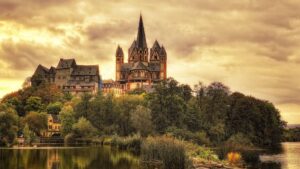
Taking our country into God’s “inner castle”
Having found our own place in our inner castle, we now want to bring our country before God and consciously take it into His sanctuary – His inner castle. We want to focus our attention on God's work in the coming year and learn to perceive it—even where the Holy Spirit hovers over chaos - to bring forth creative order. (Genesis 1:2). With us are millions of angels who stand for this country.
We give our country, our society, and our leaders a firm place in our hearts. We should not be defined by disappointment, but by a free, powerful heart that supports, blesses, and is able to transform people and circumstances. In this way, we sincerely want to accompany our country in prayer through the new year.
Dear Father, we look forward to 365 days in 2026 with you! Bless our country with your peace. We entrust Germany (and the land where we live) to your protection. Come, Spirit of Wisdom, to help our politicians, decision-makers, and those actively involved in business. Let us pray that they may have an encounter with wisdom (see Proverbs 9:1-6). We pray for peace, growth, and a new and flourishing environment. That God's order may be revealed even in chaos. We bless all people in our land with love. May humanity and justice be reborn. Dear Father, we shelter this land within your “inner castle” and under your protection. (2 Samuel 22:33).
Alexander Schlüter

The Economy
Since taking office at the end of February, the German Federal Government has slightly reduced electricity taxes and network connection fees. A temporary industrial electricity price will be introduced in 2026. Furthermore, the Bundestag has introduced expanded depreciation allowances and future tax cuts for many companies.
These measures essentially treat symptoms but do not reform structures that fundamentally improve the competitiveness of industry. The decisions are expensive, resulting in higher social security contributions, taxes, and national debt, which will foreseeably further impair the state's ability to act and the economic competitiveness of Germany. By 2025, approximately 24,000 companies had filed for insolvency, and well over 100,000 jobs in our industrial economy had been lost. We are experiencing the first supply gaps in our daily lives, which, given our oversupply, are not yet significant, but cast a shadow that will affect other companies and the European economy as a whole. At the same time, employment is growing in publicly funded sectors, further widening the gap between government revenue and government expenditure. Germany is not only in the middle of its most severe economic crisis since the Federal Republic was founded, but also in a massive crisis of confidence among businesses and the population. The economy needs planning certainty, which is no longer guaranteed by constantly changing political intervention. According to a recent recognised opinion poll, the majority of the population views Germany's phase-out of nuclear energy as a mistake. Two-thirds believe that the level of migration is significantly overburdening Germany. Similarly, two-thirds of those surveyed reject the proposed phasing-out of the internal combustion engine, which the European Union Commission is now putting forward for discussion.
Prayer:
- Where our material prosperity is falling back, God then earnestly desires greater well-being for us. (Psalm 36:5-9).
- For courage, creativity, and confidence for entrepreneurs. (Isaiah 42:3-4).
- That people who are losing their jobs may hear God's call for them to serve in other ways. (Mark 2:14).
Karin Heepen

Pensions and the income of citizens
The pension package which was passed by our government at the beginning of December includes the extension of the mothers' pension with the equalization of childcare periods for children born before 1992, an active pension as an incentive for tax-free additional income, and the strengthening of private pension plans. Furthermore, it fixes the pension level at 48 % from 2031 and will thus cause additional costs of 15 billion Euros annually from 2032 onwards. Criticism came primarily from the younger members of the conservative CDU Party (Christian Democratic Union) regarding the subsequent costs for the next generation. Employers' associations are calling for a fundamental reform that stops the spiralling burden on the statutory pension insurance system. Shortly before Christmas, the Cabinet also approved the citizen's income reform, which is intended to replace the citizen's income with a basic income guarantee. It does provide for more sanctions, prioritizes job placement, and is also a step towards greater personal responsibility.
Both reforms are compromises because of massive resistance from the SPD Party (Social Democratic Party). The key point of contention between Christian-based and socialist societal
models, which have increasingly dominated our social policy in recent decades, is the underlying concept of humanity and whether state welfare or personal responsibility for one's livelihood takes priority. Federal Labour Minister, Baerbel Bas, called for a fight against the employers in the discussion.
Those who want to spend more money on social programs must indeed strengthen the employer side, rather than provoking class struggles.
Prayer:
- That we as Christians may be role models for society, trusting not first and foremost in the state, but in God the Father for our provision, and becoming active ourselves. (Psalm 118:1-9)
- That the necessary cuts may bring consolidation between social systems and continue to support those who are truly in need. (Deuteronomy 10:18)
- For a balance of interests between employers and employees that serves the common good. (Philippians 2:3-4)
Karin Heepen

Artificial Intelligence – challenges and opportunities
Germany's position in the use of Artificial Intelligence (AI) – (KI in German) is solid, but not leading, in international comparison. In the Global AI Index, the Federal Republic occupies a place in the upper middle of the field. Government funding programs, strong research, and high ethical standards provide a good foundation. At the same time, there is a need to catch up in terms of infrastructure, data availability, and, above all, practical application. Currently, only a comparatively small proportion of companies are using AI productively, while other economies are scaling up more quickly. Indeed, for the German economy, it will be crucial to combine technology with skills development.
AI can help make skilled trades and service professions more attractive to young people again. Administrative tasks can be automated, and job profiles gain in technical depth and creative freedom. In skilled trades, this can lead to an increase in value. In the nursing professions, the potential of AI lies primarily in providing relief through improved planning and documentation, creating space for interpersonal care, provided that structural reforms accompany it.
From a biblical perspective, humanity remains unique and distinctive in all of this. As created in the image of God, we cannot be limited to function or perform in a better way with AI. We were created with dignity, responsibility, and the capacity for a relationship with God. No machine or software can replicate this. AI can support and enhance, but it cannot replace relationship, responsibility, and conscience. We must be vigilant about this, and about humanity's mandate to rule, cultivate, and preserve—without fear, yet with certainty. All technology is subject to this mandate to serve humanity.
Prayer:
- For German companies: Courage for innovation, employee development, and responsible, visionary leadership. (1 Timothy 2:1-2; Proverbs 13:20)
- For employees: Willingness to learn, confidence, and openness to new roles. (Philippians 4:13; Proverbs 3:5-6)
- For us, followers of Jesus: to participate fearlessly and responsibly – in prayer and in everyday life. (Matthew 6:9-10; Genesis 1:28)
Tanja Frank
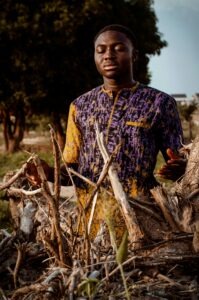
United in suffering and persecution
When we talk about the persecuted Christians in Nigeria, we are not talking about some distant footnote in world history. We are talking about our brothers and sisters—people who call upon the same name of Jesus as we do, under conditions we can scarcely imagine. In recent months, their suffering has intensified: armed attacks by extremist groups have devastated villages, burned down homes and churches, torn families apart, pastors have been kidnapped and children orphaned.
And yet, that is not the whole story. The Christians in Nigeria are not weak. They are strong—not through weapons or influence, but through faith, perseverance, and a hope that runs deeper than fear and death. While we in the West often struggle with exhaustion and disorientation, they pray for steadfastness for us. They live their faith in the face of risk, yet hold fast to love, to forgiveness, and to fellowship. They remind us: the Church is not a building or a program. The Church is the body of Christ. And when one member suffers, all suffer together. (1 Corinthians 12:12-14:26).
This interconnectedness is a spiritual reality. Their tears and their courage concern us. When we pray for Nigeria, we do so not from a distance, but as part of the body of Christ.
At the same time, there are now many migrant communities from many different nations in our country. We can pray with them and for them right here. Let us discover one another! God has brought us together to pray together.
Let us invite the Holy Spirit to broaden our thinking so that new opportunities for common prayer may arise. And let us stand alongside them and the persecuted Christians in Nigeria and in other regions of the world and to meet them all in their suffering.
Alexander Schlüter
God’s blessing for the New Year 2026!
Alexander Schlüter and Team
Keine Ergebnisse gefunden
Die angeforderte Seite konnte nicht gefunden werden. Versuche, deine Suche zu verfeinern, oder nutze die Navigation oben, um den Beitrag zu finden.