Prayer Letter for Germany April 2026
Dear intercessors,
The prayer letter this month provides some excellent guidance for our prayers concerning the "War against Iran", and with regard to "The invisable front of radical Islamism" which is not only to be seen in the current war against Iran and as a threat to the continued existance of God's chosen nation of Israel, but also as a spiritual challenge to our Christian faith, witness and practice in the church, the body of Christ, in our Western world - and to the continued spread of the gospel world-wide !
The prayers proposed in the letter for these concerns include the following:
- For divine intervention, that the structures of the Iranian Revolutionary Guard Corps (IRGC) will collapse. (Jeremiah 49:38)
- That the severely afflicted body of Christ in Iran may find its calling and that all the people in Iran may be set free. (1 Peter 2:6-10)
- That Europe may humbly rebuild itself based on Christ, who has made it strong. (Jeremiah 3:22)
- For an increase in dreams and visions of Jesus, the "Man in White", among Muslims world-wide. (Acts 9:5; John 14:6; John 8:32)
- For workers to take part in the harvest in the Muslim world, even in positions of power, and for supernatural protection and wisdom for those already engaged in evangelism and discipleship. (Luke 10:2; Isaiah 52:7)
Please take any opportunity to pray with Muslim back-ground believers in your churches and prayer groups, with believers from the Middle-East - especially from Iran.
In a time full of unrest and uncertainty, we invite you to rediscover God's peace together. It is a peace that goes deeper than our circumstances and begins in our hearts. Let us learn to live in this peace and to act from it. Together, we want to create space so that God's presence can transform us and work through us.
May God grant us a broader perspective and open our hearts anew as we read the prayer letter this month.
Thank you for praying once again with us intercessors in Germany,
Your Call of the Watchmen Team - Germany and International.
PS: Please consider using the "Sway" version (the large print, colour graphic version) of the prayer letter in your prayer groups, projected onto a wide-screen, if possible, as this can really help you to follow the prayer topics as you pray together.

For what and how should we pray? From not knowing to discovering something anew
The world is in a state of flux. In Germany, too, much is in upheaval: political certainties are crumbling, the main political parties are no longer stable, while insecurity, tension, and even the fear of war is growing. At this time, in this situation, an honest question arises: For what and how should we actually pray?
If we look closely, we often realise: we do not know. We lack an overview, we only partially understand the inter-connection of events, and we have lost control. But perhaps this is precisely the beginning of something new. For uncertainty takes away our illusion of having some control - and simultaneously opens an opportunity for us to trust. God does not wait for us to understand everything. But He invites us to discover and trust Him in a new way.
For a long time, we have thought that we knew how prayer works: to pray for "right" decisions, clear directions, and for positive developments. But what happens when these certainties shatter? When we no longer know which side we are on? Then a world of not-knowing arises - and perhaps it is precisely at this time that intercessory prayer begins anew. Jesus teaches us to: “Love your enemies”. In a world full of conflict, this seems almost impossible. Yet it radically challenges our thinking. Who is my enemy, anyway? The familiar pattern of “us versus them” no longer holds true. Deep down, we sense that human beings are created for unity, not division. Perhaps that is why prayer does not begin in a battle - not even on a “spiritual level” - but in seeking God's heart. A heart that reconciles instead of dividing.
But God's kingdom follows a different dynamic. It grows quietly, does not coerce, and knows no ideological fronts.
The logic of this world is based on power, control, and enforcement. But God's kingdom follows a different dynamic. It grows quietly, does not coerce, and knows no ideological fronts. When we stop thinking in categories of “right” and “wrong”, “good” and “evil”, our prayer also changes. It expands. It becomes less focused on “our side” winning and more focused on opening our hearts, fostering reconciliation, and cultivating wisdom.
In doing so, we must recognise how deeply we ourselves are influenced by our own perspectives. Every person is born at a period of time when what is then familiar and acceptable is elevated and what is what is then unfamiliar and unacceptable is rejected. These impressions are deeply ingrained. It precisely this that Jesus breaks through. He does not place one nation above another, but calls us into a new way to identify others - one that embraces all people. His gaze is not directed against specific groups, but against the evil that runs through every human heart. At the same time, he is concerned for every individual person and for the healing of all.
Therefore, the question also changes. Not only "For what and how should we pray?" but "With what heart do we pray?" A heart with division in thought is different from one with unity in thought. Prayer begins where we allow God to realign our hearts. In this way, intercession becomes somewhat different: not a struggle, but a shared experience. Our prayer is directed toward the healing of individuals, relationships, and entire nations. For God is for good relationships. Jesus redeemed not only the individual, but also our shared humanity. In the end, there is the cross: not as a symbol of power, but as a sign of love. It exposes the violence of this world and overcomes it through devotion. Within him lies the quiet but the irresistible power of a peace that arises not from enforcement, but from love. Perhaps this is our prayer: that this peace may gain a place within us and through us – breath by breath, word for word.
Alexander Schlüter
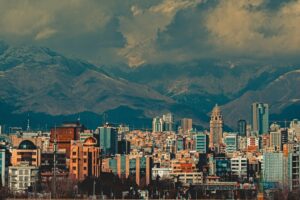
War against Iran
With the blockade of the Strait of Hormuz and attacks on oil and gas facilities in the Gulf states, the price of oil is rising, and the supply to Europe and Asia is at risk. Many leaders of the Mullah regime have fallen. However, the Iranian Revolutionary Guard Corps (IRGC) is tightly structured and operates autonomously, operating with precise instructions in the event of an attack like the one now underway. Its militias are now holding the domestic population hostage, as well as the global economy, including the Strait of Hormuz, the regime's lifeline. Since the US have begun attacking Iranian ships to control the sea lane, Iran has expanded its attacks to include desalination plants in the Gulf states, which are vital for water supply in these countries.
Many leaders of the Mullah regime have fallen.
After initially supporting the attacks, Chancellor Merz reversed his position, apparently under pressure from the SPD party, which, like Federal President Steinmeier, considers the war to be a violation of international law. However, pre-emptive strikes are permitted under international law in cases of acute threat, such as the Iranian nuclear program, with which the Mullah regime has long defied international law. Germany finally complied with the US request to contribute to securing the Strait of Hormuz in a joint declaration with 20 other states.
Iran has now also shelled the Old City of Jerusalem, where the Temple Mount was previously off-limits, and Hezbollah has again targeted northern Israel. Let us pray that the war, which began with a Purim miracle, will end at Passover with the complete annihilation of the Mullah regime:
- For divine intervention, that the structures of the Iranian Revolutionary Guard Corps will collapse. (Jeremiah 49:38)
- That the severely afflicted body of Christ in Iran may find its calling and all the people in Iran may be set free. (1 Peter 2:6-10)
- For protection for Israel and renewed vitality amidst the exhaustion of war. (Exodus 15:1-21)
- For mercy in the judgment on the global economy and our dependence on "black gold." (Revelation 18)
Karin Heepen
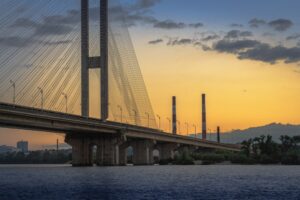
Four years of war: a spiritual battle for Europe
Since Russia's annexation of Crimea in 2014, church leaders in Ukraine have been teaching about a national transformation that goes deeper than simply ending the war and occupation. While the public debate in Europe focuses almost exclusively on arms deliveries, they are laying the spiritual foundations for institutional reforms of governance, the economy, and society. They are building on successful experiences from the transition period in countries like Poland and the Baltic states, and pointing to the Christian foundations in post-war Europe, which are increasingly being eroded today. Putin justifies his war with this moral, cultural, and spiritual decline of Europe, portrays himself as the leader of the "Third Rome", and defender of Christianity, and he sees Kyiv as the spiritual centre of a vast Russian empire. In 2019, the Ukrainian Orthodox Church declared independence from Moscow in response to the Russian Orthodox Church's alleged misguided support of the war. In the face of this confrontation with a religiously fuelled war, church leaders in Ukraine are questioning the liberal view, prevalent in the West, that faith and politics should be separated. The Ukrainian Greek Catholic Church (UGCC) plays a key role in the transformation of the land, with a theology from within the public sphere, where, in the face of occupation, the core message is as follows: “National renewal begins with you and the place you call your home, so that the nation can become resilient to pressure from outside of itself, and a free, just, and prosperous society can be rebuilt.”
Prayer:
- Thanks be to Ukraine for its resilience and the exemplary role of its churches. (1 Samuel 2:3-10)
- That Europe may humbly rebuild itself based on Christ, who has made it strong. (Jeremiah 3:22)
- That the God of the Bible will stand against the misuse of His name by Putin and his corrupt church, put a stop to it, and that all the weapons will fall silent. (Ephesians 6:12)
Karin Heepen
The invisible front of radical Islamism
The war situation which is escalating in the Middle East is no longer confined to this region, but essentially encompasses the entire spectrum of radical Islamism, bringing an uncomfortable truth to light: we are not only dealing with political or military challenges, but with a deeply rooted ideological and religious threat.
Beyond Iran and its allied terrorist militias, other examples make this clear. In Afghanistan, the Taliban quickly returned despite decades of military intervention and re-established their order. In Nigeria, internally generated specifically purposed governance could not effectively stop Boko Haram. And many of the former prisoners from the US Naval Detention Centre in Guantanamo Bay are returning to their extremist convictions. All of this shows that ideology cannot be defeated by force and with weapons.
This reality is now global. The Iranian missile attack on the British Diego Garcia military base, if nothing else, made it clear that even cities like Berlin lie within the potential threat radius. At the same time, the blockade of the Strait of Hormuz is already having a tangible impact on our daily lives. Furthermore, we must be aware that radicalised Islamism is a global phenomenon in that its followers live and operate worldwide. The current conflict therefore directly affects us as well.
Political and military intervention is important, but they alone cannot bring about a lasting solution. A religious/ideological problem demands a spiritual response. Lasting change does not primarily occur through external pressure, but through internal transformation. We know from Iran (and the wider Muslim world) that such a transformation has been taking place within the population for years. The underground church in Iran is now growing rapidly, and Jesus himself is revealing himself to millions of Iranians in dreams and visions. Therein lies real hope and also powerful authority – even if it may sound like folly to the world.
Prayer:
- For an increase in dreams and visions of Jesus, the "Man in White", among Muslims worldwide. (Acts 9:5; John 14:6; John 8:32)
- For workers to take part in the harvest in the Muslim world, even in positions of power, and for supernatural protection and wisdom for those already engaged in evangelism and discipleship. (Luke 10:2; Isaiah 52:7)
- For us Christians in the Western world, for a growing awareness of this spiritual dimension and the urgency to stand firm in faith and embrace our mandate of prayer. (Ephesians 6:10-16)
Tanja Frank

Peace in my heart – peace in our country
We live in a time that we often feel is difficult and threatening. The daily news, social challenges, and personal unrest – all of this affects us not only environmentally but also within ourselves. Our nervous system is overstrained, our thoughts know no rest. But true peace is not to be found outside of ourselves, but in our own hearts. Peace is more than just a feeling. It is found within ourselves, in an inner domain where we can experience personal growth. Not a peace that depends on circumstances, but one that endures. A peace that always sustains us – and flows through us into the world. When peace becomes our "clothing," when others can actually see that we must carry something special within us and wonder what kind of person we might be, the atmosphere around us also changes. People will sense that we have peace. The Bible speaks of "shalom" – a deep, holistic peace. Not merely the absence of conflict, but wholeness, true relationship, completeness. This peace is alive. It brings order, it uplifts, and brings together again what has been torn apart. Peace often seems absent in our time, yet there is the longing within us to experience it. God's kingdom is filled with peace. And this peace is also there for cities and nations.
Our path is indeed not one of struggle. Nor in resistance in the sense of showing strength or fighting what might be wrong for us. It is the God of peace who overcomes evil (Romans 16:20) – not we through our own efforts. Our task is to remain in this peace, to let it grow within us (2 Peter 1:2). Peace brings everything under God's rule. Therefore, perhaps the most honest question for us to answer is: “How is my inner peace?”
Prayer:
- How can I make more room for God's peace in my daily life?
- Let your peace touch other people, my environment, and my city through me.
Alexander Schlüter
May the freedom of God be with us !
Alexander Schlüter and Team
Keine Ergebnisse gefunden
Die angeforderte Seite konnte nicht gefunden werden. Versuche, deine Suche zu verfeinern, oder nutze die Navigation oben, um den Beitrag zu finden.